
Did you know that choosing the wrong washer thickness could lead to failure? Whether you’re fastening bolts in a car engine or securing a beam in construction, selecting the right washer thickness is key. If you choose a washer that’s too thin or too thick, you could end up with a loose connection, resulting in safety risks or mechanical failure.
The thickness of a washer plays a major role in load distribution and torque control. Thicker washers can bear more load, while thinner washers are better suited for applications with less stress. Knowing the right thickness for your application will help you ensure that the fastener system holds up under stress.
SAE Washer Thickness Standard
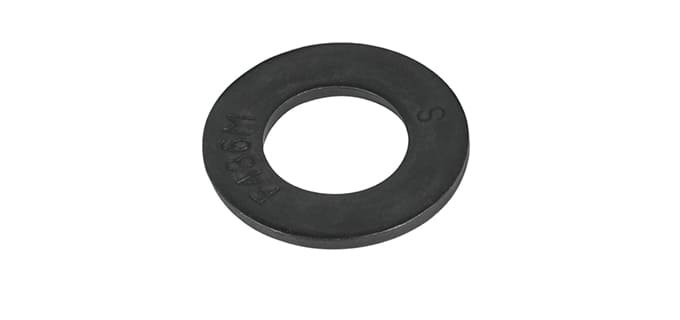
SAE washers (Society of Automotive Engineers) are commonly used in cars and light machines. These washers are made to distribute the load evenly and prevent surface damage. They are thin because they are designed for light-duty machinery. SAE washers are usually between 3/64″ and 3/16″ thick, depending on the size.
The SAE washers range from size #6 to 1-1/2″, and they are perfect for applications that require less load and more precision.
SAE Flat Washer Dimensions
| Washer Size | Inner Diameter (Inches) | Outer Diameter (Inches) | Thickness (Inches) |
|---|---|---|---|
| #6 | 5/32 | 3/8 | 3/64 |
| #8 | 3/16 | 7/16 | 3/64 |
| #10 | 7/32 | 1/2 | 3/64 |
| 1/4 | 9/32 | 5/8 | 1/16 |
| 5/16 | 11/32 | 11/16 | 1/16 |
| 3/8 | 13/32 | 13/16 | 1/16 |
| 7/16 | 15/32 | 59/64 | 1/16 |
| 1/2 | 17/32 | 1-1/16 | 3/32 |
| 9/16 | 19/32 | 1-3/16 | 3/32 |
| 5/8 | 21/32 | 1-5/16 | 3/32 |
| 3/4 | 13/16 | 1-1/2 | 9/64 |
| 7/8 | 15/16 | 1-3/4 | 9/64 |
| 1” | 1-1/16 | 2 | 9/64 |
| 1-1/8 | 1-3/16 | 2-1/4 | 9/64 |
| 1-1/4 | 1-5/16 | 2-1/2 | 5/32 |
| 1-1/2 | 1-7/16 | 3 | 3/16 |
USS Washer Thickness Standard
USS washers (United States Standard) are used in heavy-duty machines and construction. These washers are thicker than SAE washers. The extra thickness helps them handle more weight and pressure. USS washers are usually between 3/64″ and 3/16″ thick, with some washers being even thicker for stronger support.
USS washers are perfect for applications that require strength and durability under high stress. They are mostly used in industrial settings like construction and heavy machinery.
USS Flat Washer Dimensions
| Washer Size | Inner Diameter (Inches) | Outer Diameter (Inches) | Thickness (Inches) |
|---|---|---|---|
| 3/16 | 1/4 | 9/16 | 3/64 |
| 1/4 | 5/16 | 3/4 | 1/16 |
| 5/16 | 3/8 | 7/8 | 5/64 |
| 3/8 | 7/16 | 1 | 5/64 |
| 7/16 | 1/2 | 1-1/4 | 5/64 |
| 1/2 | 9/16 | 1-3/8 | 7/64 |
| 9/16 | 5/8 | 1-1/2 | 7/64 |
| 5/8 | 11/16 | 1-3/4 | 9/64 |
| 3/4 | 13/16 | 2 | 5/32 |
| 7/8 | 15/16 | 2-1/4 | 11/64 |
| 1” | 1-1/16 | 2-1/2 | 11/64 |
| 1-1/8 | 1-1/4 | 2-3/4 | 11/64 |
| 1-1/4 | 1-3/8 | 3 | 11/64 |
| 1-3/8 | 1-1/2 | 3-1/4 | 3/16 |
| 1-1/2 | 1-5/8 | 3-1/2 | 3/16 |
| 1-5/8 | 1-3/4 | 3-3/4 | 3/16 |
| 1-3/4 | 1-7/8 | 4 | 3/16 |
| 2” | 2-1/8 | 4-1/2 | 3/16 |
| 2-1/2 | 2-5/8 | 5 | 15/64 |
| 3” | 3-1/8 | 5-1/2 | 9/32 |
SAE vs. USS Washer Thickness: Which One to Choose?
Knowing the difference between SAE and USS washers helps you pick the right one for your job. SAE washers are thinner, which makes them suitable for lightweight applications, such as automotive machinery and electronics. Their precision helps reduce space without compromising performance. On the other hand, USS washers, being thicker, are stronger and ideal for heavy-duty projects like construction and machinery. Their increased thickness provides a greater surface area, distributing loads more effectively under high stress.
Material Effects on Washer Thickness Selection
The material of a washer affects its thickness. For example, stainless steel washers tend to be thicker because they need to resist corrosion and handle high stress. Carbon steel washers, while still strong, are often thinner and better for standard jobs. Aluminum washers are even lighter and thinner but are used for low-weight applications.
Choose the material and thickness that fits your project needs best to ensure the washer performs well in its environment.
Cost vs. Washer Thickness: Balancing Budget and Strength
Thicker washers usually cost more because they use more material and require more work to make. However, thicker washers can handle more pressure and last longer. Thinner washers are cheaper but may not be as strong under heavy loads. Balancing the cost and strength of the washer is key to ensuring you don’t spend too much while still getting a washer that does the job.
Custom Thickness Solutions: When Standard Washers Aren’t Enough
What if the standard washer thickness just doesn’t work for you? In some cases, you’ll need custom thickness washers to meet the demands of your project. Whether you’re working on specialized equipment, aerospace, or construction where high-stress conditions prevail, custom washers can make the difference between success and failure.
Custom washers can be manufactured to specific thickness and tolerances, ensuring they perfectly fit your project’s needs. Be sure to discuss your requirements with a trusted manufacturer who can provide you with washers that meet precise standards.
Applications of SAE vs. USS Washer Thickness
1. Automotive Industry: Using SAE Washers
In the automotive industry, lighter washers like SAE washers are often used in engine components that face moderate stress. For instance, securing a car’s exhaust system with SAE washers ensures the bolts stay in place without adding too much weight. An example of this might be using a #10 SAE washer to secure bolts on a muffler, where the forces acting on the fasteners are relatively low.
The thin design of the SAE washer helps prevent the exhaust system from becoming too heavy while still performing its function of distributing load evenly.
2. Construction and Heavy Machinery: Using USS Washers
For construction and heavy machinery, thicker washers like USS washers are critical. Consider a scenario where a large steel beam needs to be secured to a building’s frame. The high load-bearing capacity of USS washers, such as a 1″ USS washer, would be necessary to ensure that the bolts holding the beam do not loosen under stress.
A 1-1/2″ USS washer would be used in this case to distribute the heavy weight evenly and prevent any failure in the fastener system, providing extra security to the building structure.
3. Aerospace: Custom Washers for Extreme Conditions
In the aerospace industry, custom washers are often needed. A custom-made USS washer might be required to meet very specific thickness requirements to secure a fastener in an aircraft’s engine compartment. The washer needs to withstand both extreme temperature changes and high pressures while keeping the bolts intact during flight.
For this, a stainless steel USS washer with a custom thickness of 3/16″ ensures the strength and durability needed in this demanding environment.
FAQ
Q: Can I use an SAE washer instead of a USS washer?
A: SAE washers are best for light applications. If you’re working with heavy machinery or high-pressure environments, USS washers are a better choice because they are thicker and stronger.
Q: What is the difference in thickness between SAE and USS washers?
A: SAE washers are thinner, usually for lighter-duty work. USS washers are thicker and are used in heavy-duty applications where more strength is needed.
Q: How do I measure washer thickness?
A: To measure washer thickness, use a caliper or micrometer. Place the washer between the jaws and take the measurement. It’s a good idea to measure several times for accuracy.
Contact Hengrui Fastener for Custom Washer Thickness
Choosing the right washer thickness is crucial for making sure your fastener system works well. Whether you need a thinner SAE washer for light-duty applications or a thicker USS washer for heavy-duty jobs, always pick the one that fits your needs. If you have any questions about which washer to choose, feel free to contact us for expert help.