
When it comes to building highways and bridges, the fasteners used in these projects are crucial for the safety and durability of the structure. As someone who’s been working in the fastener industry for over 15 years, I’ve seen firsthand the difference that the right fasteners make. In this article, I’ll walk you through the top fasteners used in highway and bridge construction, breaking them down in easy-to-understand terms. Whether you’re an industry professional or someone interested in the construction world, this list will provide valuable insights into these essential tools.

You can learn more about the fasteners designed specifically for highway and bridge projects by exploring our dedicated page here: Highway and Bridge Fasteners.
1. Common Materials Used for Highway and Bridge Fasteners
Before we dive into the specific types of fasteners, let’s talk about the materials that make them strong enough to handle the heavy loads and harsh conditions they face. The materials used in fasteners for highways and bridges must be strong, long-lasting, and resistant to rust. Here are the most common materials used:
- Stainless Steel: This is the best option when you need fasteners that can stand up to the weather. It’s rust-resistant and strong, making it ideal for fasteners exposed to moisture, like those in coastal areas. Stainless steel is commonly used for components that require high strength and resistance to harsh chemicals and saltwater exposure.
- Galvanized Steel: This is regular steel coated in zinc to prevent rust. It’s more affordable than stainless steel and works well for fasteners that are still exposed to the elements but don’t need the same level of corrosion resistance. Galvanized steel is a reliable, cost-effective option for use in non-critical components of a highway or bridge.
- Carbon Steel: Known for its strength, carbon steel is used for fasteners like anchor bolts, where holding a heavy load is key. While it’s not as rust-resistant as stainless steel, it’s great for applications where strength is the most important factor. It is often used for structural fasteners that are not exposed directly to the elements or can be treated for added corrosion protection.
- Alloy Steel: This material is often used for high-strength fasteners like flange bolts. It’s tougher than regular steel, making it perfect for supporting heavy loads in bridges. Alloy steel is particularly valuable in applications that need extra strength and resistance to wear and tear, especially when exposed to high-stress conditions.
Now that we know what these fasteners are made of, let’s look at the key fasteners used in highway and bridge construction.
2. Common Fasteners Used in Highway and Bridge Construction
2.1 Guardrail Bolts and Nuts
Guardrails are there to keep us safe on highways, preventing vehicles from going off the road. The bolts and nuts used in guardrail systems are essential for holding the structure together, ensuring it remains intact during a crash. Here’s why they’re so important:
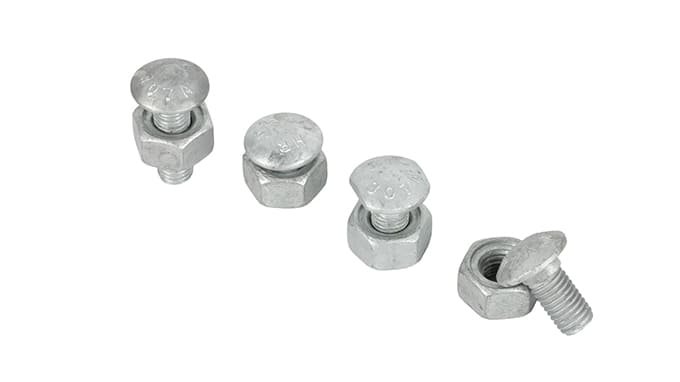
- Corrosion Resistance: Since guardrails are exposed to the outdoors 24/7, the fasteners used in them must resist rust and corrosion. Guardrail bolts and nuts are often made of galvanized steel or stainless steel for this reason. These materials offer protection against rain, salt, and extreme temperatures, all of which could otherwise weaken the fasteners over time. To meet these demands, fasteners commonly adhere to standards such as ASTM A307 and ASTM A325. ASTM A307 provides specifications for carbon steel bolts, which are suitable for general applications, while ASTM A325 is designed for heavy-duty structural bolts used in environments that demand higher tensile strength and corrosion resistance.
- High Impact Resistance: These bolts must withstand the force of collisions, ensuring that the guardrails don’t fail during an accident. These bolts absorb the shock and keep the guardrails in place, allowing the system to perform as intended in emergency situations.
In my experience working with these fasteners, I can say that the durability of guardrail bolts is tested time and time again under extreme conditions. They’re designed to save lives by keeping safety barriers intact, even in high-impact situations. A well-constructed guardrail can prevent a car from veering off a bridge or into a dangerous area.
2.2 Anchor Bolts
Anchor bolts are heavy-duty fasteners used to attach bridges to their foundations. Without these bolts, the bridge would be unstable and could shift or move, causing safety risks. Here’s what makes anchor bolts essential:

- High Load-Bearing Capacity: These bolts are designed to support heavy loads. In bridges, anchor bolts need to hold the weight of the entire structure and the forces from traffic. They are critical to ensuring the stability of the bridge, preventing it from shifting under the weight of vehicles and wind.
- Deep Embedment: To keep everything stable, anchor bolts are embedded deep into the concrete foundation, ensuring a solid connection between the bridge and its base. This deep connection allows the bridge to resist movement caused by traffic vibrations or environmental forces, like earthquakes or high winds.
When I work on bridge projects, anchor bolts are always the first thing I check. Without them, the entire structure would be at risk, which is why they play such a critical role in bridge safety. These bolts ensure that the bridge can bear heavy traffic loads and stay intact for many years.
2.3 Flange Bolts
Flange bolts are important in joining steel sections of a bridge. These bolts have a built-in flange that helps spread the weight more evenly, preventing localized damage. Here’s why flange bolts are essential:
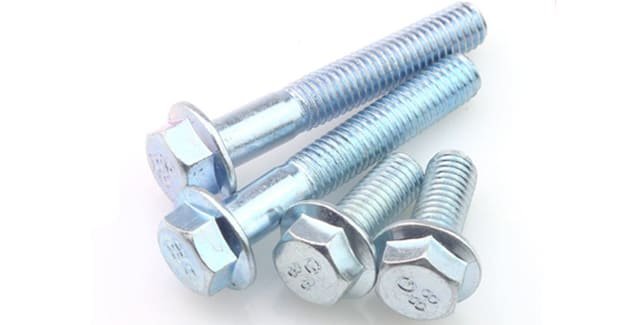
- Load Distribution: The flange on these bolts helps distribute forces evenly, reducing the risk of damaging the bridge’s steel components. Instead of putting all the pressure on one spot, the flange distributes it over a larger surface area, ensuring a stronger connection between steel sections.
- Durability: Like anchor bolts, flange bolts are made of strong materials such as stainless steel or alloy steel to handle the pressures of supporting a bridge. These bolts are specially designed to last, ensuring that bridge sections stay securely connected over time.
I think flange bolts are crucial in assembling large steel sections for bridges. Their strength and ability to distribute forces make them indispensable for maintaining the integrity of a bridge structure. When constructing a bridge, the use of flange bolts can prevent failure at the joints, which are critical load-bearing areas.
2.4 Threaded Rods and Stud Bolts
Threaded rods and stud bolts are incredibly versatile fasteners. They’re used in situations where the length needs to be adjustable, like when securing foundations or connecting different parts of a bridge. Their ability to be customized for various lengths makes them ideal for many parts of bridge construction, such as securing retaining walls or connecting components that need flexibility in their installation.
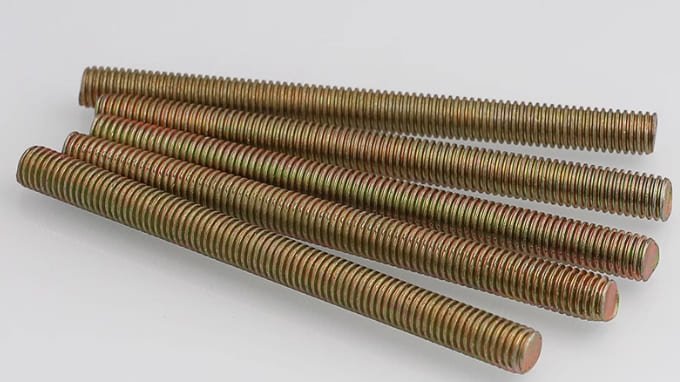
These fasteners are used in a variety of applications, from securing bridge supports to attaching retaining walls. Their ability to hold heavy loads while remaining flexible is a major advantage. In many bridge projects, threaded rods and stud bolts can be used to tighten or loosen connections depending on the requirements of the design.
In my experience, threaded rods and stud bolts are a go-to choice when precision and adaptability are needed in construction. They can be easily cut to length, making them ideal for projects that require adjustments or custom sizes. Their strength and versatility have made them an essential part of many highway and bridge projects.
FAQ
1. What is the most important fastener used in highway construction?
In highway construction, guardrail bolts and nuts are often considered one of the most important fasteners. These fasteners are responsible for keeping the safety barriers secure, ensuring they stay in place during accidents and preventing vehicles from veering off the road. Their strength and corrosion resistance are critical for highway safety.
2. Why are anchor bolts used in bridge construction?
Anchor bolts are used in bridge construction to secure the bridge to its foundation, preventing any movement or shifting of the structure. Without anchor bolts, the bridge would be unstable, posing a risk to both the structure itself and the people using it. These bolts need to bear heavy loads and withstand forces like traffic vibrations and environmental conditions.
3. How do flange bolts contribute to the safety of bridges?
Flange bolts are used to connect steel sections in bridges. The built-in flange helps distribute the load evenly across the connection, preventing localized stress and potential damage. They ensure that the bridge sections remain securely connected, even under the weight of heavy traffic or extreme weather conditions.
4. What is the role of threaded rods in bridge construction?
Threaded rods are versatile fasteners used in bridge construction for adjustable connections. They allow for flexibility in length, making them ideal for securing foundations or joining different parts of the bridge. Threaded rods can bear heavy loads and offer precise adjustments, making them essential in many construction applications.
Conclusion:
The fasteners we’ve covered—guardrail bolts, anchor bolts, flange bolts, and threaded rods—are essential to the safety and durability of highways and bridges. These fasteners ensure that everything stays securely in place, whether it’s a guardrail, a steel bridge deck, or a foundation. As someone who’s worked with these products in real-world projects, I can confidently say that the right fastener makes all the difference in keeping our infrastructure strong and safe.
Each fastener we’ve discussed is designed for a specific purpose, whether it’s handling heavy loads, withstanding impacts, or distributing forces across a larger area. By choosing the right materials and fasteners for each part of a bridge or highway, we ensure the long-term safety and functionality of these vital structures.
So next time you drive over a bridge or down a highway, remember that these small but mighty fasteners are playing a huge role in keeping you safe.
If you have any questions about which Highway and Bridge fastener to choose, feel free to contact us for expert help.