
Using the wrong screw can cause weak joints, loose structures, and safety risks. Many buyers think all screws work the same. That is not true. In construction projects, the screw you choose decides strength, safety, and cost. This article helps you avoid mistakes and choose the right screw for your job.
Structural screws, also called construction screws, are made for load-bearing connections. They are strong, thick, and tested for safety. Regular wood screws are made for light work only. They are not designed to carry heavy loads. If strength and safety matter, these two screws are not the same.
If you’re working on timber framing, decking, or any project that carries weight, knowing the difference can save you a lot of headaches. Let’s dive in.
What Are Structural Screws (Construction Screws) and Why Are They Used for Load-Bearing Projects?
Structural screws, also called construction screws or structural wood screws, are made for load-bearing connections. They are used in projects where safety matters, such as timber frames, decks, beams, and structural joints. In my experience, buyers choose these screws when failure is not an option.
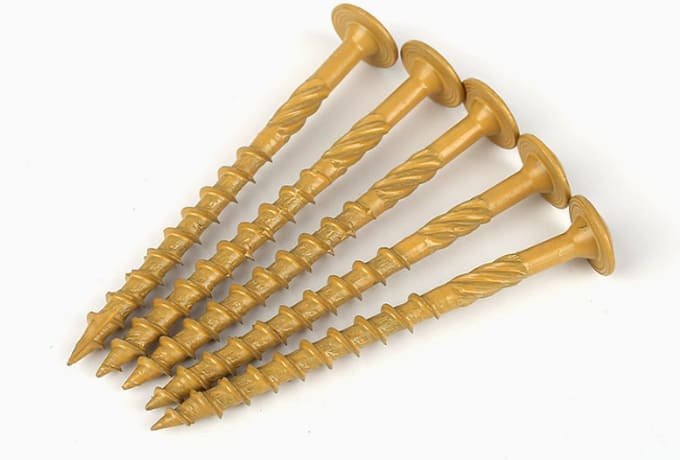
These screws often feature a thicker shank, deeper threads, and sometimes a self-drilling tip, allowing them to penetrate heavy timber without pre-drilling. They’re perfect for timber frames, beams, decking, and heavy joists.
These screws are usually made from high-strength carbon steel or alloy steel. The steel is heat treated to increase strength. To protect against rust, common surface treatments include zinc plating, mechanical galvanizing, or special corrosion-resistant coatings. This makes them suitable for outdoor use and long-term service.
Another key point is certification. Structural screws are normally tested for load capacity and meet construction or engineering standards. This means their strength is proven, not estimated. They are commonly used in timber framing, deck construction, roof structures, towers, and heavy wooden connections, where codes or engineers require certified fasteners.
When I first started in the fastener business, I tested three popular structural screws on a timber beam. We applied extreme stress, simulating real-world load conditions, and found that structural screws maintained grip while standard wood screws started to strip the wood. This practical test convinced me that for load-bearing timber structures, structural screws are the only safe choice.
What Are Regular Wood Screws and Why Are They Only Used for Light-Duty Applications?
Regular wood screws are designed for light-duty wood connections. They are widely used in furniture, cabinets, panels, and indoor woodworking projects. These screws are easy to install and low in cost, but they are not made for structural strength.

Most regular wood screws are made from standard carbon steel. The steel is thinner and softer compared to structural screws. Surface finishes are usually basic zinc plating or black oxide, which offer limited corrosion protection. These coatings are suitable for dry, indoor environments but not for long-term outdoor exposure.
Regular wood screws are not load rated and not structurally certified. This means there is no tested data showing how much weight they can safely carry. They should only be used in non-structural applications, where failure does not affect safety or stability.
Structural Screws vs Regular Wood Screws
| Item | Structural Screws | Regular Wood Screws |
|---|---|---|
| Load rating | Tested and load-rated | Not load-rated |
| Safety level | High, suitable for structural use | Low, non-structural only |
| Corrosion resistance | Strong, outdoor-ready | Limited, indoor use |
| Head design | Large, reinforced | Standard |
| Thread design | Deep, strong grip | Thin, shallow |
| Certification | Yes, meets standards | No certification |
| Typical use | Beams, decks, frames | Furniture, panels |
| Failure risk | Very low when used correctly | High under heavy load |
| Cost | Higher | Lower |
Why Does Load Capacity Matter When Choosing Structural Screws vs Wood Screws?
Load capacity is not just a number. It is about how much force a screw can safely hold over time. Structural screws are tested for both vertical and side forces. Regular wood screws are not.
In our internal testing and customer feedback, regular wood screws often fail in two ways. They either bend under load or slowly loosen after months of use. Structural screws are designed to avoid both problems, even in long-term projects.
This is why replacing structural screws with regular wood screws is risky. Even if the joint looks strong at first, failure often happens later. In construction, late failure is the most dangerous kind.
When Should You Use Structural Screws, and When Are Wood Screws Enough?
You should use structural screws when the connection carries weight, affects safety, or must meet building rules. This includes beams, decks, frames, towers, and any load-bearing wooden structure. In these cases, strength and certification matter more than price. They cost more per piece, but they reduce risk, repairs, and responsibility.
Regular wood screws are fine when the load is light and failure does not create danger. Furniture, cabinets, light panels, and indoor decorative work are good examples. These screws are easy to install and cost less, which is perfect for simple jobs.
Common Buying Mistakes We See in Construction Projects
One common mistake is choosing screws based only on size. A bigger regular wood screw is not the same as a structural screw. Strength comes from design and testing, not only diameter.
Another mistake is ignoring the environment. Outdoor projects need corrosion-resistant screws. Using indoor screws outside leads to rust, loss of strength, and early failure.
The last mistake is mixing screw types in one structure. This creates weak points. A structure is only as strong as its weakest fastener.
FAQ: Structural Screws vs Regular Wood Screws
Can regular wood screws replace structural screws?
No. This is unsafe and often against building rules.
Are structural screws always required by code?
For load-bearing connections, yes in most regions.
Do structural screws need pre-drilling?
Some do. Many modern ones are self-drilling.
Are structural screws suitable for outdoor use?
Yes, if the correct coating is chosen.
Conclusion:Contact Hengrui Fastener for Custom Structural Screws
Choosing the right screw can make or break your construction project. Structural screws, or construction screws, are designed for strength, load-bearing capacity, and long-term durability, while regular wood screws are only for light-duty tasks.