
Your bolted joint is tight today. Then heat, vibration, or a soft gasket shows up. The clamp force quietly fades. The nut still looks tight, but the joint is not. That’s how small fastener problems become big downtime problems. I’ve seen it in automotive brackets, wind towers, and machinery bases.
A Belleville washer is a cone-shaped spring washer that acts like a tiny, very stiff spring under a nut or bolt head. When you tighten the bolt, the washer flexes and pushes back. That push helps keep clamp force steady even when parts settle, creep, or vibrate. It’s compact, high-strength, and ideal when space is limited.
If that sounds simple, good. It is simple. The tricky part is choosing the right one and installing it the right way. That’s where most “mystery loosening” stories begin.
What Is a Belleville Washer?
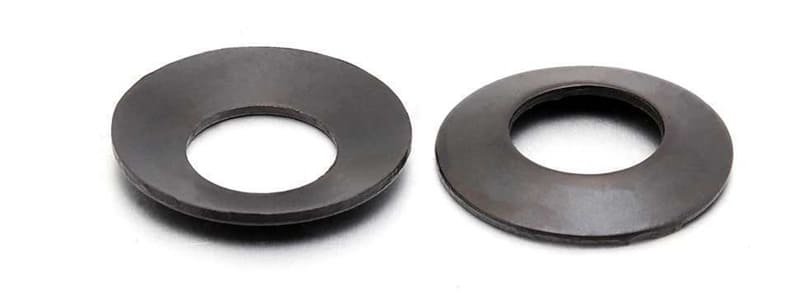
A Belleville washer is also called a disc spring, conical spring washer, or cup spring washer. In RFQs, I see “Belleville” the most, especially from North America.
It looks like a thin metal ring pressed into a cone. One side sits higher than the other. When you tighten the bolt, the cone compresses toward flat. That movement is elastic, so it behaves like a spring.
People often ask about sizes. What matters are OD, ID, thickness, and free height (the cone height). Many metric disc springs are made to DIN 2093, which defines these dimensions in a consistent system. If you’re buying for an engineered joint, checking DIN 2093 (or an equivalent spec) is a smart move.
And yes—buyers ask why it’s called “Belleville.” The name became a common industry term and stayed. In practice, if your buyer says “Belleville washer,” they mean a conical disc spring washer, not a flat washer and not a split lock washer.
Common DIN 2093 sizes and load ranges
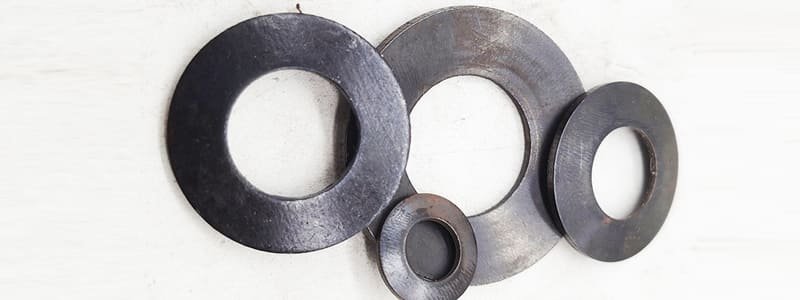
When buyers say “DIN 2093 Belleville washer,” they usually mean disc springs to DIN EN 16983 (formerly DIN 2093). In standard catalogs, the outside diameter is commonly 6–250 mm, and the spec groups parts by thickness: Group 1 (<1.25 mm), Group 2 (1.25–6 mm), Group 3 (>6 mm). Many suppliers also stock around ~246 standard DIN-type sizes in that OD range, so you can often buy “standard” without waiting for custom tooling. For load, DIN-type disc springs are also offered in Series A/B/C (different height/thickness ratios), which changes how “stiff” the washer feels and how much travel you get at a given force. Exact load numbers depend on the exact size and series, so I always pull them from the maker’s table.
What materials and finishes are used for Belleville washers?
Most Belleville washers are made from spring steel when you need high force in a small space, and stainless steel when corrosion is the bigger enemy. Many DIN 2093-style catalogs list common spring steels like Ck67 and 50CrV4 for standard ranges. For harsh jobs (high heat, fatigue, special environments), some projects move to higher-grade alloys, but the key is matching material to temperature, corrosion, and fatigue life.
What is the purpose of a Belleville washer?
The purpose is simple: keep clamp force from dropping when real life attacks your joint. A Belleville washer is a conical spring. It flattens a bit when you tighten the bolt, then keeps pushing back. That spring action helps your joint stay tight when parts settle, gaskets creep, coatings compress, or temperature changes make things move.
How to Use a Belleville Washer?
For a simple single-washer setup, slide it onto the bolt or stud. The ID should fit the shank cleanly. Place it under the nut or under the bolt head—wherever the design wants the spring action. Then tighten to the specified torque so the washer compresses within its working range.
The small detail that causes big trouble is orientation. In many common builds, we place the convex (raised) side facing the nut, so tightening pushes it toward flat and develops spring load. But don’t treat that as a universal rule. If the drawing or spec calls for the cup facing the joint side, follow it.
If the joint surface is soft—aluminum, plastic, painted surfaces, or softer alloys—add a flat washer between the Belleville washer and the soft surface. That flat washer spreads the load and reduces bite marks and embedding.
Stacking is where Belleville washers become a real design tool. Stack them the same direction to get more travel (more spring movement). Stack them opposed in pairs to get more load capacity. Mixed stacks tune both. This is not “just assemble and hope.” The stack changes the load-deflection behavior a lot.
At Hengrui, when a client uses stacking in a critical joint, we usually do a quick bench check. We assemble the exact stack, tighten to the target torque, and confirm the washer still has spring shape after unloading. It’s a fast way to avoid a bad surprise in production.
What Are the Benefits of a Belleville Washer?
Keeps the clamp force steady
Parts settle over time. Coatings get thinner, Gaskets “sink.” A Belleville washer keeps pushing back. That helps the joint stay tight.
Strong spring in a small space
You get a lot of spring force, but it takes very little height. This is great when the design has no room for a coil spring.
Helps in vibration and shaking
Vibration tries to reduce clamp force. The washer adds “give” to the joint, so preload drops slower.
Easy to adjust with stacking
Change the thickness or the stack direction, You can get more travel, more force, or both.
What Are the Disadvantages of Belleville Washers?
Not good for small loads
These washers are stiff. If the load is too small, they barely move.
If they barely move, they don’t help much.
Easy to get wrong
Wrong size. Wrong direction. Wrong stack.
Any one of these can reduce the spring effect.
Can mark soft surfaces
On aluminum, plastic, or painted parts, they may bite in.
A flat washer under it often solves this.
Too much tightening can ruin it
If you press it too flat, it may not spring back.
Then it becomes “just a washer,” not a spring washer.
Costs more than a flat washer
It is usually pricier than a simple flat washer, especially with special material or coating.
What industries use Belleville washers?
I see Belleville washers most often in industries where bolts live a hard life: energy and power equipment, oil & gas / chemical plants, automotive and transportation, and industrial machinery. These systems deal with vibration, thermal cycling, dynamic loads, and long service intervals—exactly where clamp force tends to fade.
They also show up in electrical connections (like busbar joints) because contact pressure matters, and metals can relax over time. The short version is: if a joint is critical, hard to access, or exposed to shaking and heat swings, a Belleville washer is often on the shortlist. If you tell me your bolt size, joint material, and environment, I can point you to a practical DIN group and a sensible finish for that use.
What Is the Difference Between a Belleville Washer and a Regular Washer?
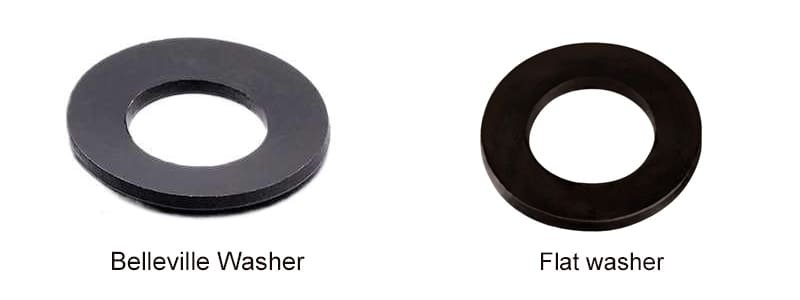
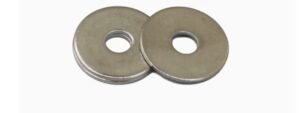
A regular flat washer spreads load and protects surfaces. That’s its job. It doesn’t provide meaningful spring force.
A Belleville washer is a spring element. It is designed to flex and maintain preload.
Here’s the practical way I explain it to buyers: a flat washer protects the part. A Belleville washer protects the clamp force.
In many real designs, we use both. Put the flat washer against the surface for load spreading. Put the Belleville washer above it for spring action. It’s simple, and it works.
| Aspect | Belleville washer | Flat washer (regular) |
|---|---|---|
| Basic shape | Conical, cup-shaped disc | Flat disc |
| Main function | Provides spring force, maintains preload, resists vibration | Spreads load over a larger area, protects surface |
| Load behavior | Non-linear spring load–deflection, can be tuned via stacking | Essentially rigid; negligible elastic deflection |
| Vibration/relaxation | Helps maintain clamp force under vibration and joint relaxation | Provides little or no locking or compensation |
| Surface protection | Smaller contact area, may need flat washer on soft surfaces | Good surface protection and embedment control |
| Design complexity | Requires correct orientation, sizing, and sometimes stacking | Very simple to specify and install |
| Typical use | High-load, space-limited, or critical joints (electrical, structural, high temperature) | General fastening, spacing, and protection |
Frequently Asked Questions (FAQ)
Can a Belleville washer replace a lock washer?
In many engineered joints, yes. It can hold preload better than common split lock washers, especially with vibration and thermal cycling. But always validate against the joint design and torque/preload requirements.
Do I always need a flat washer under it?
No. If the surface is hard, smooth, and stable, you may not. If the surface is soft, coated, or uneven, a flat washer is usually a smart insurance policy.
How do I know I over-compressed it?
If it comes out nearly flat and stays flat after unloading, or you see cracking and edge damage, it likely took a permanent set. Replace it.
What standards should I look for?
DIN 2093 is widely used for metric disc springs. Many buyers reference it even when ordering custom sizes.
What materials and finishes are common?
Spring steel is common for high force. Stainless steel is used for corrosion resistance. For outdoor or corrosive use, zinc-flake coatings (Geomet/Dacromet/RUSPERT) are common options depending on the spec.
Contact Hengrui Fastener for Custom Disc Springs Washer
If your joint deals with vibration, heat swings, gasket creep, or tight space, a Belleville washer is often one of the most efficient tools you can add. It’s small, but it plays a serious role: keeping clamp force stable when real-world conditions try to steal it.
At Hengrui, we supply standard and non-standard fasteners, and we also support custom disc springs, machining parts, and stamping parts for OEM projects. If you share your bolt size, joint material, working temperature, and environment, we can suggest a practical washer setup, material, and finish that match your application.