
In mechanical, construction, and other industrial applications, nuts and bolts are commonly used together to connect and secure various equipment or components. Among the many types of nuts, hex nuts (Hex Nut) and hex jam nuts (Hex Jam Nut) are two of the most common. While they appear similar, both having a hexagonal shape, there are significant differences in design, function, and use. Understanding these differences is crucial for selecting the right nut to ensure the reliability and safety of the connection. In this article, we will explore the differences between hex nuts and hex jam nuts, helping you make a more informed choice.
A hex nut is a full-height, six-sided nut that serves as the primary fastening component, providing the main clamping force in bolted connections. A hex jam nut is similar but thinner, about half to two-thirds the thickness of a regular hex nut. It’s often used in conjunction with a standard hex nut to prevent loosening, particularly in areas with limited space.
Now that we have a quick overview, let’s explore these two fasteners in more detail and discover their unique roles in various applications.
What Are Hex Nuts?
A hex nut is a standard, six-sided fastener that is commonly used in construction, machinery, and assembly. It has a full height, which gives it a strong presence and allows it to handle significant clamping force when used with bolts or studs. Hex nuts come in a variety of grades, which are usually defined by international standards such as ASTM A563
Hex nuts are typically used as primary fasteners. These fasteners can be found in machinery, structural assemblies, and anywhere where a reliable, strong clamping force is required. Their thick, full profile ensures that the nut can securely hold a joint under high stress or vibration.
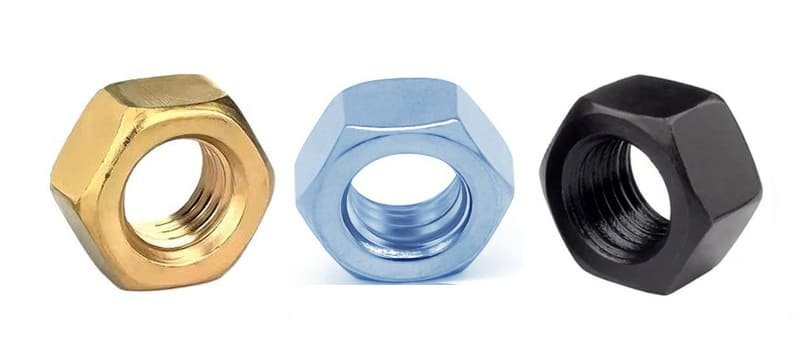
The main application of a hex nut is to be placed directly against the joint material, where it can hold components together by tightening onto a bolt or stud. It is crucial that the hex nut meets specific strength standards, making it suitable for load-bearing applications.
What Are Hex Jam Nuts?
A hex jam nut looks almost identical to a regular hex nut, but it is thinner – typically about half to two-thirds the thickness of a standard hex nut. The thinner profile makes it ideal for use in tight spaces where a full-height hex nut cannot fit. Hex jam nuts are primarily used as locking nuts.
Unlike the standard hex nut, which is designed for structural strength, the hex jam nut is used in conjunction with another nut to prevent loosening due to vibration. It’s a locking mechanism that “jams” the two nuts together to secure them in place. Hex jam nuts often have a lower proof load rating compared to full-height hex nuts, typically about 60% of the load rating of a full-size nut of the same grade.
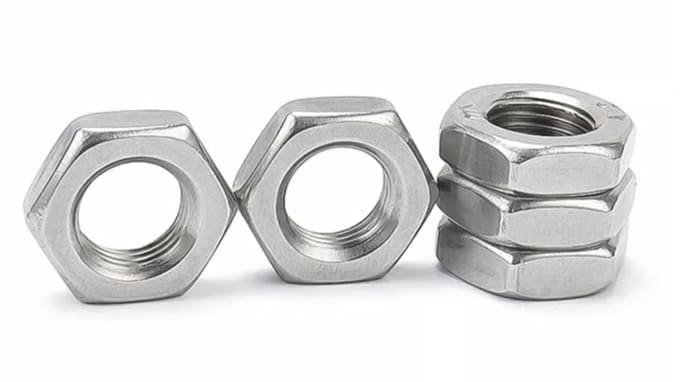
This thinner profile means that while a hex jam nut is useful in applications where space is limited, it may not be able to carry the same load as a regular hex nut. However, it excels in preventing loosening when paired with a full-size hex nut.
Usage Together Hex Nut and a Hex Jam Nut
One of the most common setups is to use both a hex nut and a hex jam nut together. The standard hex nut is first tightened onto the bolt to provide the main clamping force, then the hex jam nut is tightened against the hex nut. This “jam” action prevents the hex nut from loosening under vibration or dynamic loads.
In areas where space is at a premium, or a full-height nut just won’t fit, a single hex jam nut may be used. However, it’s important to note that this setup won’t provide the same strength as a full-size hex nut, as the jam nut’s profile is much thinner. Still, it’s a clever way to lock the bolt in place without taking up much space.
Major Differences Between a Hex Nut and a Hex Jam Nut
Function: A hex nut is the primary fastening nut that directly handles the load, while a hex jam nut is a secondary nut that locks the main nut in place to prevent loosening.
Size and Thickness: Hex nuts are thick and designed for structural strength, whereas hex jam nuts are thinner and designed to fit in limited spaces.
Load Capacity: Hex nuts have a higher load capacity due to their thicker, full-profile design. Hex jam nuts, on the other hand, are weaker and rated for lower proof loads.
Typical Use: Hex nuts are typically used as the primary fastener, while hex jam nuts are used to lock the hex nut in place to prevent it from loosening over time, often in applications where space is tight.
Quick Comparison: Hex Nut vs. Hex Jam Nut
| Feature | Hex Nut (standard) | Hex Jam Nut |
|---|---|---|
| Shape | Hexagonal, full height | Hexagonal, thinner/low profile |
| Typical Thickness | Full nut height | About half to two-thirds of hex nut thickness |
| Primary Role | Main load-carrying, structural fastening | Locking/anti-loosen, clearance-critical uses |
| Strength Grading | Usually graded as structural fastener | Often lower proof load, not always structural |
| Typical Use | Directly against joint material | Jammed against another nut on the same bolt |
When to Use Hex Nuts?
You should use hex nuts in situations where the nut will bear the primary load and where strength is crucial. They are the go-to choice for high-stress applications such as steel structure connections, equipment foundations, and flange connections. They are designed to meet clear strength standards and provide reliable clamping force.
If your application requires a reliable fastener to hold materials together, or if it needs to withstand significant mechanical stress, a hex nut is your best option.
When to Use Hex Jam Nuts?
Hex jam nuts are the best option when you need to prevent a standard hex nut from loosening due to vibration or dynamic loads. These applications might include machinery with frequent vibrations, vehicles, pumps, HVAC systems, or any system where components need to stay securely fastened.
In addition to being used for locking purposes, hex jam nuts are also great when space is limited. If you can’t fit a full-size hex nut in a particular location, a hex jam nut is a low-profile option that can get the job done.
Frequently Asked Questions (FAQs)
- Can I use a hex jam nut by itself?
No, hex jam nuts are typically used in conjunction with a full-size hex nut to lock them in place. They are not suitable for use on their own in load-bearing applications. - Can hex jam nuts replace standard hex nuts?
Hex jam nuts should not replace standard hex nuts, as they lack the strength to carry primary loads. They are primarily used for locking purposes and for applications where space is limited. - Are hex jam nuts weaker than hex nuts?
Yes, hex jam nuts are typically rated for lower strength and proof load compared to standard hex nuts. They are designed for securing nuts in place rather than bearing significant loads.
Contact Hengrui Fastener for Custom Hex Nut and a Hex Jam Nut
Whether you’re assembling machinery, constructing a building, or securing bolts in tight spaces, understanding the difference between a hex nut and a hex jam nut is essential for choosing the right fastener. Both have unique roles in fastening systems, and using them correctly will ensure a secure, long-lasting connection.
Remember, hex nuts are the primary fasteners for clamping forces, while hex jam nuts are your go-to for locking and preventing loosening, especially when space is at a premium. Choosing the right one for your application can make all the difference!
Have any questions? Feel free to reach out to us at Shanghai Hengrui Industry Co., Ltd, and we’ll help you find the perfect fasteners for your needs!