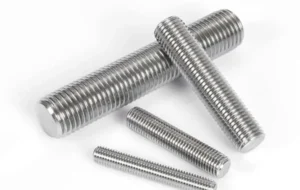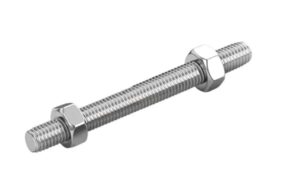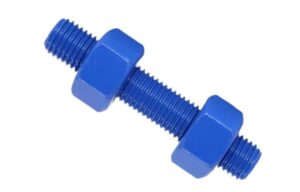

Choosing stud bolts for flange connections looks easy, but one small detail can change the whole order. The flange size is right, but the length is wrong. The material looks good, but the nut grade does not match. The coating is nice, but the nut cannot run smoothly. Yes, flange bolting has its own little tricks.
To choose stud bolts for flange connections, you should first check the flange standard, size, pressure class, and face type. Then confirm stud bolt diameter, quantity, length, material grade, nut grade, surface treatment, marking, and documents. ASTM A193 B7 is common for many flange projects, B16 is used for higher temperature service, and B8/B8M are used when stainless steel is required. The final choice should always follow the drawing and project specification.
In this guide, I will not repeat too much about each ASTM grade. We already talked about B7, B7M, and nut matching in other articles. Here, we focus on flange connection itself.
Why Are Stud Bolts Commonly Used for Flange Connections?
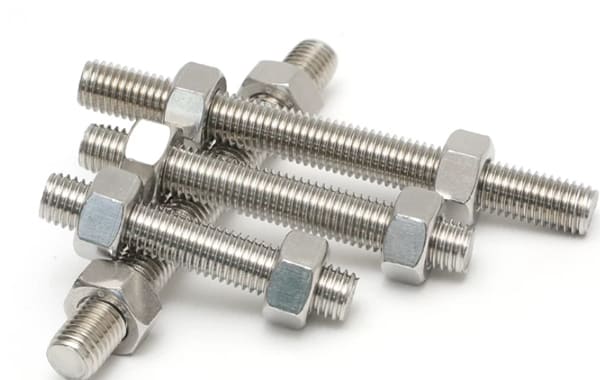
Stud bolts are commonly used for flange connections because they are easy to install from both sides. A stud bolt has threads on both ends, or along the full body. It usually works with two heavy hex nuts. This design is very useful for flanges, valves, pressure piping, and petrochemical projects.
For maintenance, stud bolts are also friendly. Workers can loosen nuts from either side. This is helpful when the pipeline space is limited. In many flange assemblies, especially in industrial systems, stud bolts are more common than ordinary hex bolts.
ASTM A193 stud bolts are widely used for high-pressure and high-temperature service. They are often selected together with ASTM A194 heavy hex nuts.
Are Stud Bolts Better Than Hex Bolts for Flanges?
For many industrial flange connections, stud bolts are the better choice. They give good thread engagement on both sides and are easier to match with heavy hex nuts. That is why many flange standards and project drawings use stud bolts.
Hex bolts have a head on one side and a nut on the other side. They can be used in some equipment or light-duty connections, but they are not always the first choice for pressure flange service. The final choice depends on the drawing.
| Item | Stud Bolts | Hex Bolts |
|---|---|---|
| Head type | No head | One head |
| Nuts | Usually two nuts | Usually one nut |
| Common flange use | Very common | Project-based |
| Maintenance | Easy from both sides | Depends on access space |
| Typical order | Stud bolt + 2 nuts | Bolt + 1 nut |
What Flange Information Should You Check First?
Before choosing stud bolts, we first check the flange information. This includes flange standard, size, pressure class, face type, and service condition. Without these details, the stud bolt size is only a guess.
Common flange standards include ASME B16.5, ASME B16.47, DIN, EN, and JIS. ASME B16.5 is often used for common pipe flanges and flanged fittings. ASME B16.47 is used for large diameter steel flanges from NPS 26 to NPS 60.
You can send us this information:
| Information | Example |
|---|---|
| Flange standard | ASME B16.5 |
| Flange size | 4 inch |
| Pressure class | Class 300 |
| Face type | RF or RTJ |
| Service | Oil, gas, steam, chemical |
| Drawing | Better to send |
How Do You Choose the Correct Stud Bolt Length?
Stud bolt length depends on more than flange size. It also depends on flange thickness, gasket type, face type, nut height, washer use, and thread projection. RF and RTJ flanges may need different stud bolt lengths.
For normal flange bolting, the stud bolt should have enough thread engagement with the nuts. It should also have proper end projection after tightening. Too short is not good. Too long also wastes cost and may affect installation space.
We suggest you follow the project drawing or flange bolt chart. If there is no chart, send us the flange standard, size, class, face type, and gasket information. We can help check the common length before quotation.
Which Material Grade Should You Choose for Flange Stud Bolts?
Material grade should match the service environment. This is very important for piping, valve, EPC, and petrochemical projects. The right grade is not always the strongest grade. It is the grade that fits temperature, pressure, corrosion, and project specification.
Here is a simple guide:
| Service Condition | Common Stud Bolt Grade | Simple Note |
|---|---|---|
| General high-pressure or high-temperature flange | ASTM A193 B7 | Common and cost-friendly |
| Sour service or H2S-risk line | ASTM A193 B7M | Lower hardness control |
| Higher temperature flange | ASTM A193 B16 | Used when project requires higher temperature performance |
| Stainless steel application | ASTM A193 B8 | 304 stainless steel |
| Better corrosion resistance | ASTM A193 B8M | 316 stainless steel |
| General low-strength use | ASTM A307 | Only if project allows |
For B7 details, you can read our guide on ASTM A193 B7 stud bolts. For B7 and B7M difference, read ASTM A193 B7 vs B7M stud bolts.
Which Nuts Should Match Flange Stud Bolts?
Flange stud bolts usually work with heavy hex nuts. The nut grade should match the stud bolt grade. This is not only for strength. It also helps the whole bolting set meet the project requirement.
Common matching:
| Stud Bolt Grade | Common Nut Grade |
|---|---|
| ASTM A193 B7 | ASTM A194 2H |
| ASTM A193 B7M | ASTM A194 2HM |
| ASTM A193 B8 | ASTM A194 Grade 8 |
| ASTM A193 B8M | ASTM A194 Grade 8M |
| ASTM A193 B16 | ASTM A194 7 or 16, according to project |
Which Surface Treatment Is Better for Flange Stud Bolts?
Surface treatment should match the working site. Plain and black finish are common for normal indoor or protected use. Zinc plated finish gives light corrosion protection. Hot dip galvanizing is often used for outdoor projects. PTFE coating is common in many flange bolting projects because it helps reduce friction and makes installation easier.
We can also offer Dacromet, Geomet, Magni, mechanical galvanized, Zn-Ni, nickel, chrome, painting, polishing, and other finishes according to the project requirement.
Coating is not only about color. It can affect thread fit and tightening. Hot dip galvanizing adds coating thickness, so nuts may need proper overtapping. PTFE coating can change friction. For coated flange stud bolts, we usually test nut running before packing. It is a small check, but very useful.
What Should You Check Before Shipment?
Before shipment, you can check marking, documents, thread fit, coating, and packing. These details help the warehouse or job site identify the goods more easily.
For marking, stud bolts may show B7, B7M, B16, B8, or B8M. Nuts may show 2H, 2HM, 8, or 8M. The marking should match the MTC, heat number, packing label, and inspection record.
For documents, common requirements include MTC, dimension inspection report, hardness report when required, coating thickness report, salt spray test report, and third-party inspection report. Not every order needs all documents. The project specification decides.
Contact Hengrui Fastener for Custom Stud Bolt
Shanghai Hengrui Industry Co., Ltd supplies standard and non-standard fasteners, custom machining parts, and stamping parts. Our products include bolts, nuts, washers, screws, stud bolts, custom fasteners, turning parts, and stamping parts.
If you are choosing stud bolts for flange connections, contact us and send us your drawing, flange standard, size, pressure class, material grade, nut grade, coating requirement, and inspection rule. We will help you check the details before production. A flange stud bolt is small, but it works in a serious place.