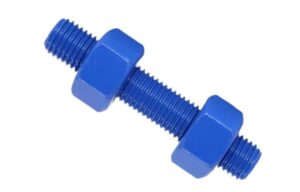

Ordering ASTM A193 B7 vs B7M stud bolts looks simple, until an inspector asks why the hardness is wrong, why the nut grade does not match, or why B7 was used on a sour service line. One letter can stop a shipment. I know. We see this problem often in export fastener orders.
ASTM A193 B7 stud bolts and B7M stud bolts are both Cr-Mo alloy steel fasteners for high-pressure and high-temperature service, but B7M has controlled lower hardness and sometimes lower strength for sour service or H2S-risk environments. B7M is not the metric version of B7. B7 is usually marked “B7” and used with A194 2H nuts, while B7M should be marked “B7M” and used with A194 2HM
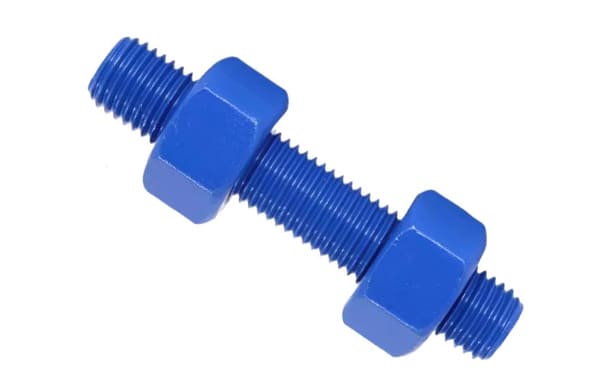
So the real question is not “which grade is better?” The better question is: which one will pass your project specification, work safely in your environment, and match the correct nut?
What Are ASTM A193 B7 Stud Bolts?
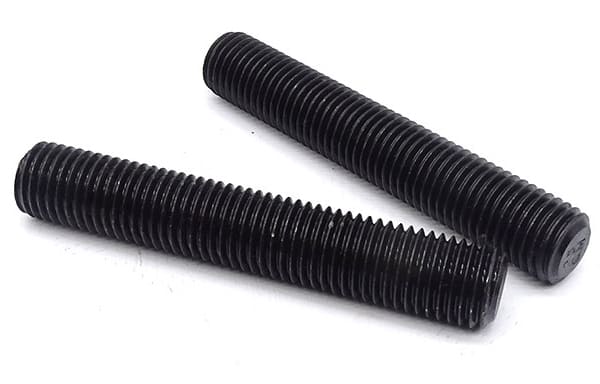
ASTM A193 B7 is a chromium-molybdenum alloy steel bolting grade. It is used for bolts, studs, stud bolts, threaded rods, and similar bolting parts in pressure vessels, valves, flanges, and fittings. You may see it in oil and gas, chemical plants, power plants, wind energy equipment, tower and pole projects, and heavy machinery.
In daily buying language, many people say “B7 bolts.” That is not wrong in a broad way. But in flange connections, the product is usually stud bolts with two heavy hex nuts. This is why I suggest using “ASTM A193 B7 stud bolts” as the main keyword. It is closer to how serious buyers search before sending an RFQ.
What Are ASTM A193 B7M Stud Bolts?
ASTM A193 B7M is also a chromium-molybdenum alloy steel bolting grade. The “M” does not mean metric. It means the grade is modified from B7. The key point is lower and controlled hardness, with different mechanical requirements in some size ranges.
B7M is often used when the working environment may include wet hydrogen sulfide, also called H2S. This type of environment is usually called sour service. In sour service, high hardness can increase the risk of sulfide stress cracking. That is why engineers often ask for B7M instead of standard B7.
From a supplier’s view, B7M is not just “B7 with another stamp.” Heat treatment, hardness testing, nut matching, and marking all need more attention. In our export orders, the three B7M mistakes we see most are missing hardness records, wrong 2H nuts used instead of 2HM nuts, and unclear grade marking on the stud ends.
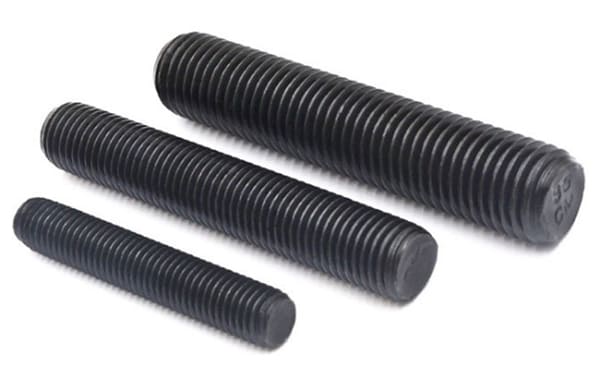
Is B7M Just the Metric Version of B7?
No. This is a very common misunderstanding. B7M is a material grade. Metric is a size system. For example, “ASTM A193 B7M M24 x 3 x 300 mm” means the grade is B7M, and the size is metric M24. These two “M” letters are not doing the same job. Small letter, big trouble.
If you want metric B7, you can write ASTM A193 B7, M24 x 3 x 300 mm. If you want B7M, you must clearly write ASTM A193 B7M. Do not leave this to the supplier’s guess.
ASTM A193 B7 vs B7M Stud Bolts: Quick Comparison
The table below uses the grade comparison data from our RFQ checking file. It is useful for fast review before quotation. Please still check the latest ASTM standard and your project specification before final approval.
| Grade | Bolt Size | Tensile Strength | Yield Strength | Elongation | Reduction of Area | Hardness |
|---|---|---|---|---|---|---|
| B7 | To 2-1/2 in. | 125 ksi min | 105 ksi min | 16% min | 50% min | C35 max |
| B7 | Over 2-1/2 to 4 in. | 115 ksi min | 95 ksi min | 16% min | 50% min | C35 max |
| B7 | Over 4 to 7 in. | 100 ksi min | 75 ksi min | 18% min | 50% min | C35 max |
| B7M | To 4 in. | 100 ksi min | 80 ksi min | 18% min | 50% min | 235 HB / B99 max |
| B7M | Over 4 to 7 in. | 100 ksi min | 75 ksi min | 18% min | 50% min | 235 HB / B99 max |
This table shows one detail many people miss. B7 is not always stronger in every size range. For smaller and medium sizes, B7 has higher tensile and yield strength. But over 4 to 7 inches, the tensile and yield values can be the same in this table. The real difference then is hardness control and service environment.
Key Differences Between B7 and B7M Stud Bolts
The first difference is tensile strength. For sizes up to 2-1/2 inches, B7 has 125 ksi minimum tensile strength in the table above. For B7M up to 4 inches, the value is 100 ksi minimum. That is why B7 is often used for normal high-pressure flange work when sour service is not required.
The second difference is hardness. This is the most important point for B7M. B7M is limited to 235 HB or B99 in the table. B7 is shown as C35 max. Lower hardness is one reason B7M is used for sour service. A stud bolt can have the right size and nice coating, but if hardness is wrong, it can still fail the project.
The third difference is heat treatment. Both B7 and B7M are quenched and tempered. But the target result is different. B7 aims for higher strength. B7M aims for controlled lower hardness. That means B7M production needs careful furnace control, good hardness testing, and clear inspection records.
The fourth difference is application environment. B7 works well for many normal high-pressure and high-temperature jobs. B7M is selected when the line has H2S risk, sour service, or a NACE / ISO 15156 requirement. But B7M is not stainless steel. It does not solve every corrosion problem. If the issue is seawater, chloride, or strong chemical attack, ask the project engineer before choosing material.
Which Nuts Should Be Used: A194 2H or 2HM?
People often say “B7 nuts” or “B7M nuts,” but that is not the strict standard name. B7 and B7M belong to ASTM A193 bolting material. The common nut specification is ASTM A194, which covers nuts for high-pressure or high-temperature service.
For ASTM A193 B7 stud bolts, the usual matching nut is ASTM A194 Grade 2H heavy hex nut. For ASTM A193 B7M stud bolts, the usual matching nut is ASTM A194 Grade 2HM heavy hex nut. Easy memory trick: B7 goes with 2H. B7M goes with 2HM.
If a drawing says “B7M studs with 2H nuts,” stop and confirm. Sometimes the project owner allows it. Sometimes it is a copy-paste mistake. We should not guess. Nut mismatch is one of the fastest ways to turn a good price into a bad order.
Can B7 Stud Bolts Replace B7M?
Usually, no. B7 should not replace B7M unless the project engineer or end user gives written approval. The reason is simple. B7 can have higher hardness, while B7M is selected to control hardness for sour service. A stronger stud bolt is not automatically a safer stud bolt.
Can B7M replace B7? Also not by default. In some size ranges, B7M has lower tensile and yield strength than B7. If the joint design needs B7 strength, B7M may not meet the design requirement. So both replacement directions need approval.
When Should You Choose B7 or B7M?
Choose ASTM A193 B7 stud bolts when the service is not sour, the drawing calls for B7, and the project needs higher strength with good availability. B7 is common for flanges, valves, pressure equipment, mechanical equipment, and many industrial projects. It is usually easier to source and more cost-friendly than B7M.
Choose ASTM A193 B7M stud bolts when the drawing calls for B7M, the service has H2S risk, or the project mentions sour service, NACE MR0175, or ISO 15156. For B7M, ask for hardness records, material test reports, heat treatment records, and clear marking. If the project is strict, arrange third-party inspection before shipment.
Also check the surface treatment. Plain, black, zinc plated, hot dip galvanized, PTFE, Geomet, Magni, Zn-Ni, and other finishes can be supplied based on the project. But coating is not decoration only. Hot dip galvanizing affects thread fit. PTFE affects friction. If torque matters, coating must be confirmed before production.
How to Order B7 or B7M Stud Bolts Without Mistakes?
A good RFQ saves time. Please include standard, grade, diameter, thread, length, quantity, nut grade, surface finish, test documents, packing method, delivery time, and destination. If you have a drawing, send it. If the service is sour, say it clearly.
At Shanghai Hengrui Industrial Co., Ltd, we supply standard and non-standard fasteners, custom machining parts, and stamping parts for B2B, OEM, and wholesale buyers. Before shipment, our team can check material reports, hardness records, dimensions, thread fit, marking, coating, and packing.
If you are not sure whether to choose B7 or B7M, send us the drawing, service environment, nut requirement, coating requirement, and inspection rule. We will help you check before production. A stud bolt is small, but when it holds a flange together, it has a very serious job.