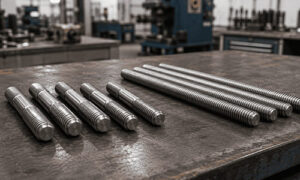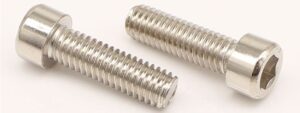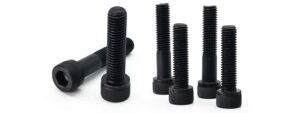

Choosing the wrong “strongest” bolt can break parts, delay projects, and waste money. That problem gets worse when buyers compare SAE, metric, and structural bolts as if they all use the same rules. They do not. That is why it helps to understand different grades of bolts before making a final choice.
In common SAE bolts, Grade 8 bolt is a standard high-strength choice. In common metric bolts, Class 12.9 is a standard high-strength choice. But the real answer depends on whether you are using SAE, Metric, or ASTM structural standards, because each system uses different markings, dimensions, and performance rules.
Common strongest bolt grades by system
| System | Common high-strength grade/class | Typical note |
|---|---|---|
| SAE | Grade 8 bolt | Common high-strength imperial bolt |
| Metric / ISO | Class 12.9 bolt | Common high-strength metric class |
| Structural / ASTM | Depends on spec | Must check application standard |
Grade 8 vs 10.9 vs 12.9 bolt
These are the three high-strength grades most often compared by buyers. One belongs to the SAE system, and the other two belong to the metric system.
SAE Grade 8 bolt is commonly listed at 150,000 psi minimum tensile strength, which is about 1,034 MPa. Metric 10.9 is commonly listed at 1,040 MPa minimum tensile strength, so it sits in nearly the same strength range. Metric 12.9 goes higher at 1,220 MPa minimum tensile strength, It is about 20% stronger than 10.9 and about 50% stronger than 8.8. On a simple tensile-strength chart, 12.9 comes out highest, while Grade 8 bolt and 10.9 bolt are very close.
Toughness and the risk of being too brittle
As the grade goes up, hardness and yield strength also go up. But ductility usually goes down. Under impact loads or poor assembly conditions, a higher-grade bolt is more likely to fail in a brittle way instead of yielding gradually. In applications that need energy absorption or repeated vibration resistance, 10.9 may be a better choice than 12.9 bolt.
Which bolt grade should you use for different applications?
The best bolt grade depends on the job, not just the biggest number on the head.
Automotive.
Metric 10.9 and SAE Grade 8 bolt are both common high-strength choices for chassis, suspension, and other demanding joints. They offer strong clamping force without pushing every application into the hardest standard option.
Heavy equipment.
Grade 8, 10.9, and in some compact high-load machine joints 12.9 can all make sense. The better choice depends on shock load, available space, and how carefully the joint will be installed and maintained.
Home repair and light-duty work.
Most home repair jobs do not need the strongest bolt grade. Mid-strength fasteners are often easier to install correctly, more forgiving in service, and more cost-effective. Using an ultra-high-strength bolt in a low-demand job often adds cost without adding value.
Outdoor and corrosive environments.
High tensile strength is not the only goal. Stainless fasteners may be the better choice where moisture, salt, or chemicals are present. In common stainless systems, A4-80 is a familiar high-strength option, and BSSA notes that property class 80 has 800 MPa minimum tensile strength. That is lower than 12.9 carbon alloy steel, but it can deliver a better service life in corrosive conditions.
Structural use.
For structural steel joints, use the specified structural fastener system. The RCSC Specification requires washers that meet ASTM F436 where applicable, and the engineer of record specifies the bolt grade, type, and coating for the assembly. This is not a place for informal substitution.
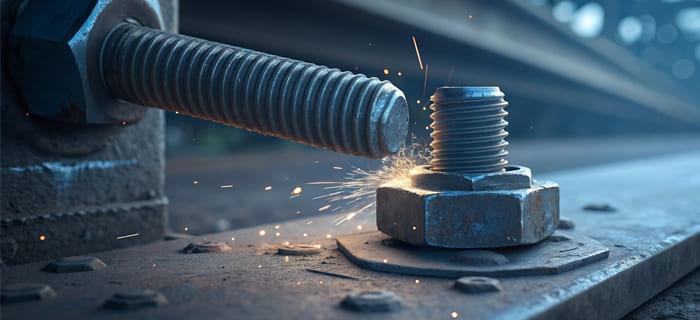
Does Stronger Always Mean Better?
Higher strength does not always mean a better choice. In engineering, several factors need to be balanced.
Corrosion resistance
Some high-strength carbon steel bolts can rust quickly in wet or chemical environments if protection is not good enough. Once corrosion starts, load capacity can drop fast. In some cases, a lower-strength stainless steel bolt can last much longer.
Brittleness & fatigue
High-strength bolts are harder, but they are often less tough. Under shock loads or repeated fatigue loads, they are more likely to crack or fail in a brittle way. In many fatigue applications, Class 8.8 or 10.9 is preferred over 12.9.
Coating & hydrogen embrittlement
High-strength bolts are more vulnerable to hydrogen embrittlement during electroplating, especially zinc plating. Strict process control and proper baking treatment are needed. Without that, the bolt may fail suddenly during service.
Temperature & standard compliance
Some high-strength grades have limits in high-temperature service, low-temperature service, or code acceptance. The correct material standard and engineering specification must always be checked. A higher grade should not be used as a direct replacement without verification.
Nut matching & thread compatibility
High-strength bolts must be matched with the correct nut and washer grades. Otherwise, the weaker part of the assembly will fail first. SAE and metric threads must not be mixed.
FAQ:Frequently Asked Questions about strongest bolt grade
Is Grade 8 stronger than 10.9?
In terms of tensile strength, SAE Grade 8 is about 150,000 psi (around 1,030–1,050 MPa), while Metric 10.9 has a nominal tensile strength of about 1,000 MPa. The two are in a similar range, with Grade 8 being slightly higher. However, they belong to different standard systems, with different materials, test methods, and application scenarios. They should not be treated as direct one-to-one replacements. Selection should be based on the design requirement or the manufacturer’s recommendation.
Is 12.9 the strongest metric bolt?
Among common standard metric bolts, Class 12.9 is usually considered one of the highest-strength grades available in normal commercial supply, with a tensile strength of about 1,200 MPa. However, some special alloy bolts and custom fasteners may exceed standard 12.9 in strength, but that goes beyond the scope of normal grade comparison.
What is the strongest stainless steel bolt grade?
Common stainless steel bolt grades include A2-70, A4-70, and A4-80. Among them, A4-80 is considered a relatively high-strength stainless steel grade, offering both good strength and corrosion resistance. Even though its strength is lower than 10.9 or 12.9 carbon steel bolts, it is still the better choice in marine or chemical environments, because corrosion resistance directly affects service life and safety.
Can I use Grade 8 bolts for structural applications?
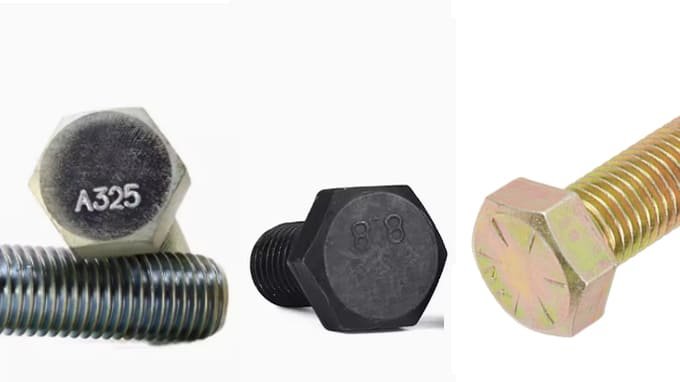
Structural steel connections usually require specific ASTM or EN high-strength structural bolt standards, such as A325, A490, or EN 14399, rather than simply calling for Grade 8. Even if Grade 8 has enough strength, it should not replace a dedicated structural bolt unless it is accepted by the relevant standard and can meet the required friction performance and preload control.
How do I identify bolt grade markings?
SAE Grade 8 bolts are commonly identified by 6 radial lines on the head. Metric bolts usually show the property class directly, such as 8.8, 10.9, or 12.9. For a faster and more accurate check, see our [Bolt head markings guide] before reviewing full specifications and certifications.
Contact Shanghai Hengrui for Custom Bolt Grade
Choosing the strongest bolt grade is never just about picking the highest number. The right choice depends on the standard system, the application, and the full service conditions.
At Shanghai Hengrui, we supply standard and non-standard fasteners, including bolts, nuts, washers, screws, and custom fasteners, with reliable quality and on-time delivery for B2B buyers worldwide.
If you need help matching the right bolt grade to your project, our team can support OEM and wholesale orders with practical fastening solutions built for real industrial use.