
Wrong Allen head bolts can cause more trouble than many buyers expect. A stripped socket, weak material, or unsuitable surface finish may slow down assembly and increase replacement costs. I’m Monica Song from Hengrui, and in this guide, I’ll help you understand the main types of Allen head bolts and choose the right one for your application.
What Is an Allen Head Bolt?
An Allen head bolt is a bolt or screw with a hex socket drive inside the head. You tighten it with an Allen key, hex key, or hex bit. The tool fits inside the head, not around it. This gives a clean look and good tool contact.
In many catalogs, you may also see names like socket head bolt, socket head cap screw, hex socket screw, or Allen bolt. The exact name depends on the head style and standard. For example, ISO 4762 is widely used for hexagon socket head cap screws.
Common Types of Allen Head Bolts
The most common types are socket head cap bolts, flat head socket bolts, button head socket bolts, low head socket bolts, socket set screws, and shoulder socket bolts. They look similar to a new buyer, but they behave very differently in real use.
This is where many purchasing mistakes happen. A buyer may choose a bolt by diameter only. That is not enough. Head height, drive depth, strength grade, surface finish, and space around the joint all matter.
1. Socket Head Cap Bolts
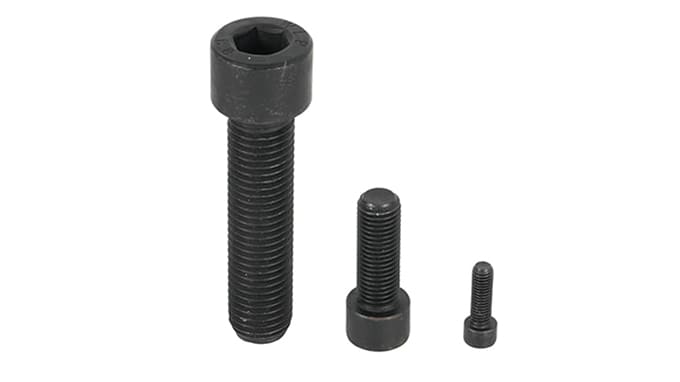
Socket head cap bolts are the “strong and serious” member of the Allen bolt family. They have a tall cylindrical head and a deep hex socket. This design gives strong tool engagement and good clamping force.
I often recommend socket head cap bolts for machinery, molds, tooling, equipment frames, and high-load assemblies. If your part needs strength more than appearance, this is usually the first option to check. For metric products, buyers often ask for M3, M4, M5, M6, M8, M10, and M12.
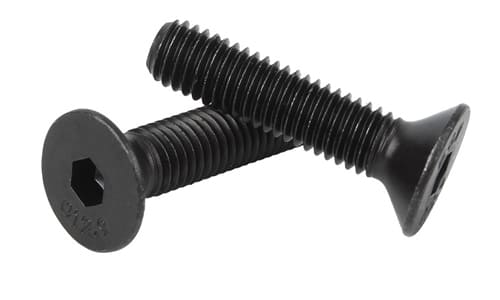
2. Flat Head Socket Bolts
Flat head socket bolts have a countersunk head. After installation, the head can sit flush with the surface. This is useful when the surface must stay flat.
They are common in panels, covers, fixtures, machine guards, and parts where a raised head would block movement. But here is my shop-floor warning: the countersink angle must match the part. If the countersink is poor, the bolt may look fine but clamp badly.
3. Button Head Socket Bolts
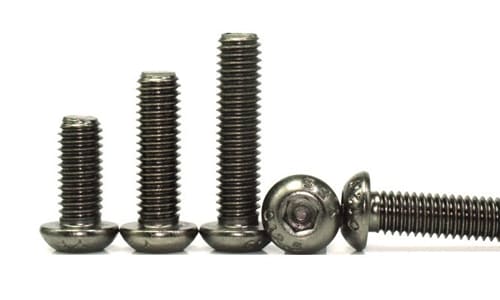
Button head socket bolts have a low, rounded head. They look smoother than socket head cap bolts. They are also safer in places where sharp edges are not welcome.
They are useful for light to medium-duty assemblies, covers, furniture hardware, electrical boxes, and visible machine parts. But do not treat them as a direct strength replacement for socket head cap bolts. The head and socket are usually lower, so the drive strength can be lower too.
4. Low Head Socket Bolts
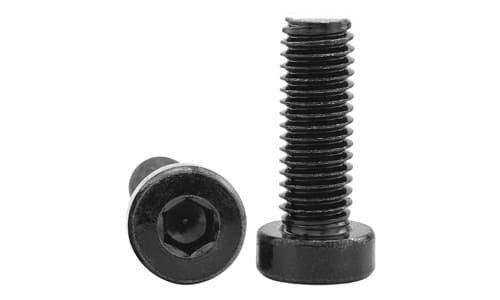
Low head socket bolts are made for tight spaces. Their head is lower than a normal socket head cap bolt. This helps when there is not enough clearance above the joint.
We use them when a machine part has limited room, or when a tall bolt head may touch another moving part. The trade-off is simple. You gain space, but you may lose some drive depth and strength. I always tell buyers: low head is a space solution, not a magic strength solution.
5. Socket Set Screws
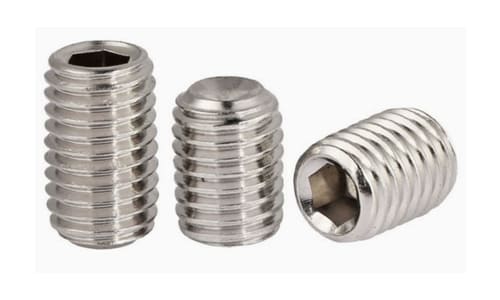
Socket set screws are different because many of them have no head. They use a hex socket and thread into a part to hold another part in place. Common tips include cup point, flat point, cone point, dog point, and oval point.
You will often see them on shafts, pulleys, collars, gears, handles, and knobs. For example, a cup point set screw can bite into a shaft. A flat point can reduce damage. The right point style matters more than many buyers think.
6. Shoulder Socket Bolts
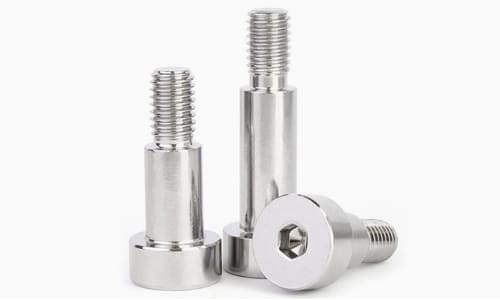
Shoulder socket bolts have a smooth shoulder section under the head. The shoulder acts like a bearing surface or guide. The threaded part only locks the bolt in place.
They are used in pivots, linkages, rollers, dies, fixtures, and moving joints. If a part needs to rotate or slide around the bolt, a shoulder socket bolt may be the right choice. The key dimensions are shoulder diameter, shoulder length, thread size, and tolerance.
What are common sizes and materials for Allen bolts?
Allen bolt sizes are usually given in metric or inch sizes. In metric, common sizes include M3, M4, M5, M6, M8, M10, and M12. Larger sizes are also common in heavy equipment. Inch sizes may range from small machine screw sizes to 1 inch or more.
Common materials
Stainless steel: Common grades include 304 and 316; these are used when corrosion resistance matters.
Carbon steel: A widely used, lower-cost option with grades such as 4.6, 8.8, 10.9, and 12.9 for different strength levels.
Alloy steel: Used for higher-strength, high-load applications.
Titanium: Chosen for a strong, lightweight, corrosion-resistant fastener.
Brass or copper: Used less often, mainly for conductivity or decorative purposes.
Differences by Surface Finish
Surface finish is not decoration only. It affects corrosion resistance, friction, appearance, and sometimes torque. Black oxide gives a clean black look and light protection, often used on alloy steel socket screws.
Zinc plated finish is common and cost-effective. Nickel plated finish gives a brighter look and better surface protection in some uses. Plain finish is simple and often used when the part will stay in a controlled environment or receive later treatment. Dacromet and Geomet are used when better corrosion resistance is needed.
What are best applications for each Allen bolt type?
Here is the simple way I explain it to buyers. Use socket head cap bolts for high-strength machine joints. Use flat head socket bolts when the surface must be flush. Use button head socket bolts when appearance and safety matter. Use low head socket bolts when space is limited.
Use socket set screws when you need to lock one part onto another, such as a gear on a shaft. Use shoulder socket bolts when a moving part needs a smooth bearing surface. This simple rule helps buyers avoid many wrong orders.
What Torque Specs for Different Allen Bolt Sizes?
Torque is not the same for every Allen bolt.
It depends on the bolt diameter, thread pitch, material grade, surface finish, lubrication, and the parts being clamped. So please do not treat one torque chart as a universal rule.
For metric 12.9-grade alloy steel socket head cap screws, the values below are often used as a common reference.
| Metric Size | Common Reference Torque |
|---|---|
| M3 | 2.20 Nm |
| M4 | 4.83 Nm |
| M5 | 10.0 Nm |
| M6 | 16.8 Nm |
| M8 | 41.0 Nm |
| M10 | 81.0 Nm |
| M12 | 142 Nm |
For inch-size fasteners, torque is usually listed in lb-ft. For clean and dry Grade 8 socket-head-style fasteners, some common reference values are:
| Inch Size | Common Reference Torque |
|---|---|
| 5/16 inch | 18 lb-ft |
| 3/8 inch | 33 lb-ft |
| 7/16 inch | 52 lb-ft |
| 1/2 inch | 80 lb-ft |
These numbers are useful for early selection.
But in real projects, I always suggest checking the final torque with your engineer, especially when the bolt has coating, lubrication, stainless steel material, or special working conditions.
In our sample checks, we tested three common tools: an L-key, a T-handle key, and a torque wrench. The L-key is fine for light assembly. The T-handle is faster for repeated work. But when stable clamping force matters, the torque wrench is the safest choice. It is less exciting, but much better for production quality.
FAQ about Allen Head Bolts
Are Allen head bolts and socket head cap screws the same?
Not always. Many people use the words loosely. A socket head cap screw is one common type of Allen head bolt, but Allen head bolt can also refer to flat head, button head, low head, set screw, or shoulder types.
Which Allen bolt is strongest?
For many machine assemblies, alloy steel socket head cap bolts in high grades such as 12.9 are a strong choice. But “strongest” depends on design, size, thread engagement, and installation.
Can stainless steel Allen bolts replace alloy steel ones?
Sometimes, but not always. Stainless steel helps with corrosion resistance. Alloy steel often gives higher strength. Do not switch material without checking load and environment.
Why does surface finish affect torque?
Because finish changes friction. Friction changes how much torque becomes clamping force. That is why torque charts are guides, not final laws.
Contact Hengrui for Custom Socket Cap Screw
We support standard and non-standard fasteners, custom materials, custom finishes, and machining-related parts for OEM, and wholesale buyers. You can contact me at info@hrfastener.com with drawings, sizes, grade, finish, and quantity.