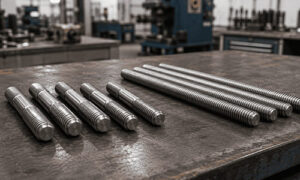

Choosing the wrong fastener may cause much more than a small installation problem. In flange connections, machinery assembly, pipe supports, or outdoor structures, the wrong product may lead to poor fit, early corrosion, loose joints, or project delay. Stud bolts and threaded rods look similar, but their applications are different.
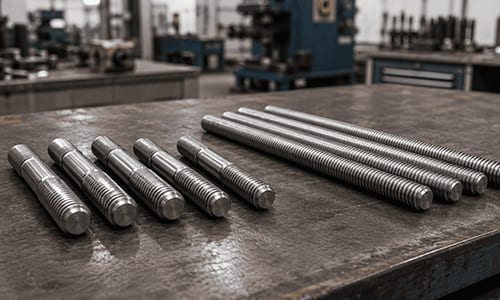
Stud bolts are usually used for fixed and controlled bolted joints, such as flanges, valves, pressure equipment, and heavy machinery. Threaded rods are usually supplied in longer lengths and used for support, suspension, fixing, anchoring, and adjustable installation. Both products have external threads, but they should not always be used as substitutes for each other.
As a fastener supplier, we often receive inquiries where the buyer is not sure whether the required part is a stud bolt, a threaded rod, or a full-thread stud. In this article, we explain the difference from a practical purchasing and engineering point of view.
What Is a Stud Bolt?
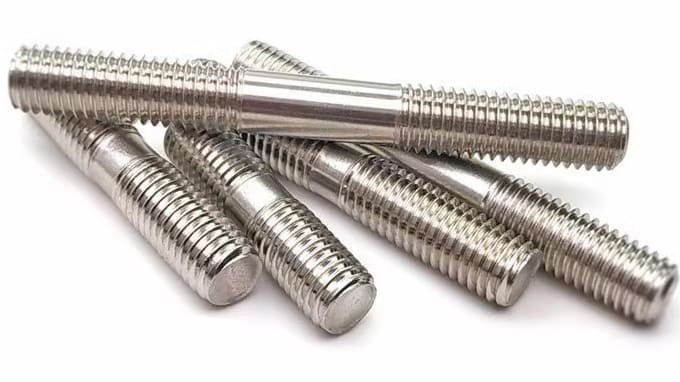
A stud bolt is a headless fastener with external threads. It is usually installed with nuts on both ends. In many industrial applications, stud bolts are used where strong clamping force and reliable joint performance are required.
Stud bolts are commonly used in flange connections, valves, pumps, pressure vessels, heat exchangers, oil and gas equipment, petrochemical systems, power plants, mechanical equipment, wind energy structures, and tower projects.
A stud bolt is not only defined by its shape. Its material, grade, thread, length, surface treatment, nut matching, and testing requirement are also important. For example, many industrial projects specify ASTM A193 B7 stud bolts together with ASTM A194 2H nuts.
What Is a Threaded Rod?
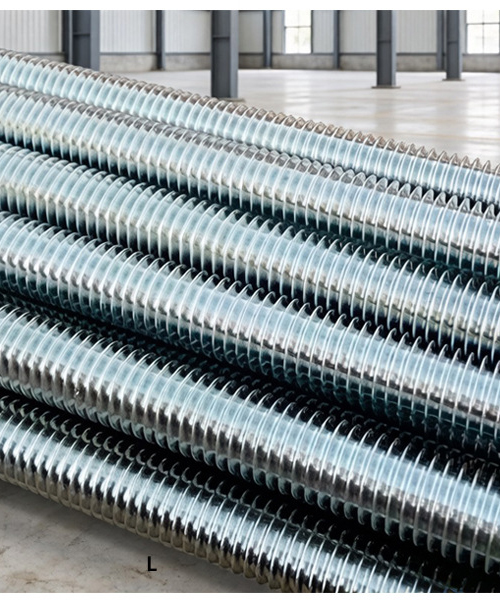
A threaded rod is a long metal rod with external threads. It may be fully threaded from end to end. It may also have partial threads, depending on the design. Threaded rods are also called all-thread rods, threaded bars, ready rods, or full-thread rods in some markets.
Threaded rods are often supplied in stock lengths, such as 1 meter, 2 meters, 3 meters, 6 feet, or 12 feet. The installer can cut them to the required length on site. This makes threaded rods suitable for flexible installation.
Threaded rods are widely used in construction, mechanical support, pipe hanging, ceiling suspension, electrical installation, HVAC systems, anchor extensions, machinery fixing, and repair work.
Threaded rods are practical and cost-effective. However, they still need the correct material and finish. A zinc plated carbon steel threaded rod may be suitable for indoor use. For outdoor, marine, chemical, or high-corrosion environments, stainless steel or special coating may be required.
Common Types of Stud Bolts and Threaded Rods
Stud bolts and threaded rods are not single products. They can be made in different structures for different installation needs.
Common stud bolt types include fully threaded stud bolts, double-end studs, tap-end studs, weld studs, and self-clinching studs. Fully threaded stud bolts are often used for flange bolting. Double-end studs have threads on both ends and may have an unthreaded body in the middle. Tap-end studs are usually installed into a tapped hole on one side and tightened with a nut on the other side.
Common threaded rod types include fully threaded rods, long threaded rods, short threaded rods, trapezoidal threaded rods, hollow threaded rods, and female threaded rods. Fully threaded rods are used for general fastening and support. Trapezoidal threaded rods are often used for motion transmission. Hollow threaded rods are often used where weight reduction or cable passage is required.
For a full guide to threaded rod types, please read our related article: Types of Threaded Rods.
Stud Bolts vs Threaded Rods: Key Differences
The main difference between stud bolts and threaded rods is not only appearance. The real difference is application requirement.
Stud bolts are usually used in specific bolted joints. Threaded rods are usually used as long threaded materials for support, fixing, and adjustable installation.
| Factor | Stud Bolts | Threaded Rods |
|---|---|---|
| Basic form | Headless fastener with external threads | Long rod with external threads |
| Typical length | Produced or cut to specific finished length | Supplied in long stock lengths and cut as needed |
| Main function | Clamping and fastening in controlled joints | Supporting, hanging, fixing, and adjusting |
| Load behavior | Designed for stable clamping force and preload | Often used for tension, suspension, and support |
| Shear load suitability | Better when designed for critical joints | Not always suitable for heavy shear conditions |
| Common application | Flanges, valves, pumps, pressure equipment, machinery | Pipe hangers, ceiling supports, anchors, construction fixing |
| Common industries | Oil & gas, petrochemical, power plant, machinery, wind energy | Construction, MEP, HVAC, general machinery, maintenance |
| Nut requirement | Often used with matched nuts on both ends | Used with nuts, washers, couplers, anchors, or brackets |
| Cutting flexibility | Usually ordered to finished size | Can often be cut to required length |
| Cost tendency | Usually higher when grade, coating, and inspection are strict | Often more economical for general support applications |
| Maintenance | Suitable for controlled joints and repeated inspection | Easier for flexible site adjustment |
| Reuse | Depends on corrosion, thread damage, stretching, and project rules | Depends on condition, load history, and site requirement |
| Standard requirement | Often strict and project-specific | Can be standard or general-purpose |
| Strength requirement | Usually more controlled | Depends on material grade and application |
| Replacement risk | High in critical joints | Lower in light-duty support applications |
| Common materials | Alloy steel, stainless steel, carbon steel, special alloys | Carbon steel, stainless steel, alloy steel, brass, special alloys |
| Common finish | Black, zinc plated, hot dip galvanized, PTFE, Dacromet, Zn-Ni, Geomet | Zinc plated, HDG, plain, black, stainless plain finish, special coatings |
| Inspection requirement | Often needs MTC, hardness test, tensile test, thread inspection | Depends on project and buyer requirement |
| Best use | Critical and controlled bolted joints | Flexible support, fixing, and adjustable installation |
Can Threaded Rods Be Used Instead of Stud Bolts?
In some light-duty applications, threaded rods can be used instead of stud bolts. For example, they may be used for brackets, frames, pipe hangers, ceiling supports, or general installation parts.
However, in pressure equipment, flange connections, valves, petrochemical systems, power plants, oil and gas pipelines, and other critical joints, threaded rods should not replace specified stud bolts without engineering approval.
The reason is simple. Critical joints require controlled strength, material traceability, correct nut matching, proper thread fit, and suitable surface treatment. A normal threaded rod may not meet these requirements.
For example, a project may require ASTM A193 B7 stud bolts with ASTM A194 2H nuts. If a general carbon steel threaded rod is used instead, the appearance may be similar, but the mechanical performance and safety level may be different.
When Should You Choose Stud Bolts?
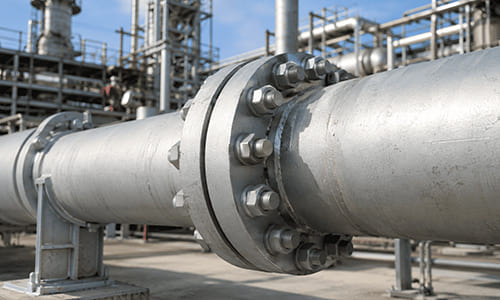
You should choose stud bolts when the joint requires strong and stable clamping force. Stud bolts are also preferred when the project has strict standards, clear drawings, or inspection requirements.
Common applications include pipe flanges, valves, pumps, pressure vessels, turbines, heat exchangers, chemical equipment, oil and gas systems, power plant pipelines, wind energy equipment, and heavy machinery.
Stud bolts are also suitable when the buyer requires certificates and test reports. These may include material certificates, tensile test reports, hardness test reports, coating inspection, thread inspection, and salt spray test reports.
When Should You Choose Threaded Rods?
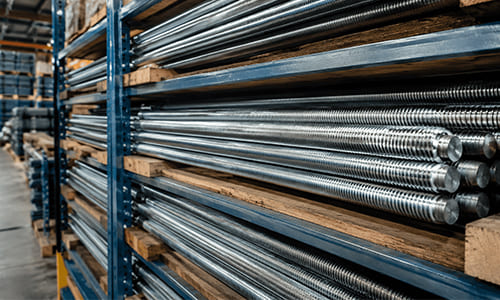
You should choose threaded rods when the application needs flexible length, easy cutting, and adjustable installation.
Threaded rods are very suitable for pipe hanging systems, ceiling supports, electrical installation, HVAC systems, mechanical frames, construction anchors, machine bases, and general support structures.
Threaded rods are also useful when the final installation length is not fully fixed before purchase. The installer can cut the rod to the required length on site. This is one reason why threaded rods are widely used in construction and maintenance projects.
In our workshop experience, we have compared several common cutting and end-finishing methods for threaded rods. Hand cutting is flexible but may leave a rough end. Abrasive cutting is faster but may need extra cleaning. Controlled machine cutting usually gives a cleaner end and better thread protection. For bulk orders, we recommend finished cutting before shipment when the buyer has a fixed length requirement.
Material selection is also important for threaded rods. For indoor dry environments, zinc plated carbon steel may be enough. For outdoor or humid environments, hot dip galvanizing, stainless steel, Zn-Ni, Dacromet, or other anti-corrosion finishes may be more suitable.
Common Mistakes When Buying Stud Bolts and Threaded Rods
The first mistake is buying only by product appearance. A photo can show the shape, but it cannot show material grade, heat treatment, tensile strength, coating thickness, or thread accuracy.
The second mistake is using the wrong product name. Stud bolts, threaded rods, full-thread studs, double-end studs, and flange bolting studs may look similar. But their standards and applications may be different.
The third mistake is ignoring nut matching. A stud bolt often needs suitable nuts. In many industrial applications, the nut grade is not optional. If the stud bolt grade is specified, the nut grade should also be checked.
The fourth mistake is choosing the wrong surface treatment. Zinc plating, hot dip galvanizing, PTFE coating, Dacromet, Geomet, Zn-Ni, Magni, nickel plating, and brass plating are not the same. They have different corrosion resistance, appearance, thickness, and cost.
The fifth mistake is comparing prices without comparing specifications. If one supplier quotes carbon steel and another supplier quotes alloy steel, the lower price may not be the better price. It may simply be a different product.
The sixth mistake is not telling the supplier the application. If the product is used for oil and gas, machinery, wind energy, automotive, tower and pole, construction, or public infrastructure, the supplier should know this before quoting.
Quick FAQ About Stud Bolts and Threaded Rods
Are stud bolts and threaded rods the same?
No. Stud bolts and threaded rods may look similar, but they are not always the same. Stud bolts are usually used for controlled bolted joints. Threaded rods are usually used for support, fixing, hanging, and adjustable installation.
Can threaded rods replace stud bolts?
They can replace stud bolts only in suitable light-duty or non-critical applications. For flanges, pressure equipment, valves, oil and gas systems, or other critical joints, the buyer should follow the drawing and engineering requirement.
What information should I provide before ordering stud bolts?
Please provide diameter, length, thread type, material, grade, surface finish, nut requirement, quantity, standard, drawing, and application.
What information should I provide before ordering threaded rods?
Please provide diameter, length, thread type, material, grade, finish, quantity, standard, application, and whether cutting or packing service is required.
How can I avoid buying the wrong fastener?
Do not rely only on photos. Please check the drawing, standard, material, grade, thread, finish, nut matching, and working environment. A clear inquiry helps the supplier quote the correct product.
Are stud bolts reusable?
Stud bolts can be reused only when the project allows it and the parts are still in good condition. Before reuse, buyers should check corrosion, thread damage, bending, stretching, and coating damage. For pressure equipment, flange joints, and safety-critical applications, the project specification should always be followed.
Are stud bolts more expensive than threaded rods?
In many cases, stud bolts cost more than general threaded rods because they may require stricter material grades, controlled lengths, matched nuts, heat treatment, surface treatment, inspection, and certificates. However, price should be compared based on the same material, grade, finish, quantity, and testing requirement.
Can threaded rods be used in concrete?
Threaded rods can be used in concrete with suitable anchors, chemical anchors, or embedded systems. The material and surface treatment should match the environment. For outdoor or humid concrete applications, corrosion resistance is very important.
Need Custom Stud Bolts or Threaded Rods?
If you need standard or non-standard stud bolts, threaded rods, nuts, washers, screws, custom fasteners, machining parts, or stamping parts, Hengrui can support your project.